

Warning: This article contains sensitive topics including suicidal ideation and infanticide.
Along with the rest of America, I have recently been unable to peel my eyes away from the Lindsay Clancy trial. In case you were living under a rock—no judgment, it’s necessary from time to time—a Massachusetts mother was on trial for the murder of her three children in 2023. It is one of the most heinous crimes the mind can conceive. Many across the country watched in disbelief, wondering—how could this have happened? As the trial went on, it became evident that she received subpar mental health care—an experience many women in America relate to.
Clancy admitted she was guilty of murdering her children, but the question was whether symptoms of postpartum depression and psychosis should have an impact on her legal responsibility for the crimes. The trial ended with probably the most expected outcome after 21 days of testimony from 85 witnesses, consideration of more than 200 pieces of evidence, and seven days of jury deliberation. The jury couldn’t agree on a verdict, so the judge declared a mistrial—as if the trial never even happened… Or is it? I am not as interested in the specifics of the case, necessarily, as I am hopeful the attention it brought can be a turning point in how our society and healthcare system understand postpartum mood disorders.
I often hear it said flippantly, working in the healthcare system—as if everyone is aware and it is to be expected—that we just don’t know the best treatment for women’s health concerns because they are under-researched and underfunded. This expectation needs to change to improve women’s health outcomes. The richest country in the world—the United States of America—has the highest maternal mortality rate of any other developed country… by far.
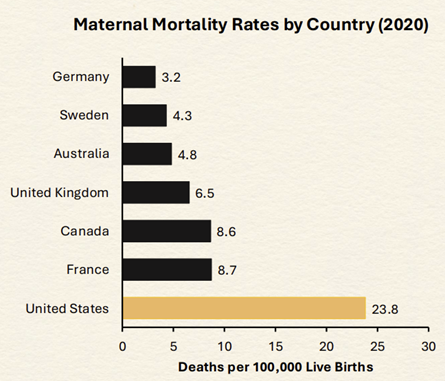
It’s hard not to notice recent cuts to women’s healthcare alongside headlines of initiating testosterone screening for male military service members—which has since been rescinded after the realization of the utter lack of evidence or necessity for these guidelines. Even so, it reveals what our society and healthcare system prioritizes.
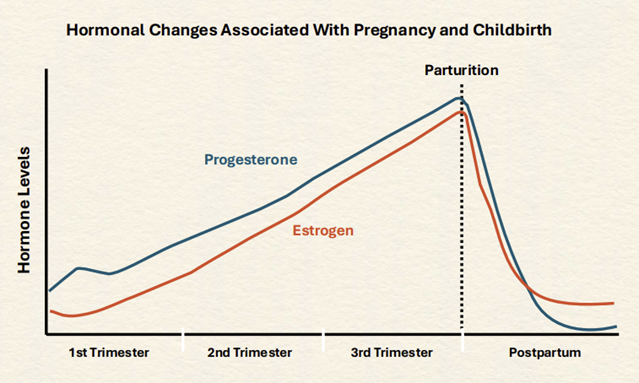
The good news is, there is exciting new research into a blood test screening for postpartum depression and postpartum psychosis completed by Jennifer L. Payne, MD. Her research has found the progesterone receptor gene is the most highly associated gene with depressive symptoms. Meaning, the brain is less responsive to changes in progesterone and cannot rebound from hormonal changes during pregnancy and delivery. Progesterone and estrogen increase steadily during pregnancy, and drop abruptly during the immediate postpartum period. Those who are at higher risk of postpartum depression may soon be able to be identified with a blood test, transforming the treatment of postpartum depression from a reactive approach to a preventative one.
How Common are Postpartum Mood and Anxiety Disorders?
Research is ongoing and is imperative since postpartum mood and anxiety disorders (PMADs) are the most common complication of childbirth. 1 in 5 women will develop a PMAD either during pregnancy or postpartum, with about 50% who are never diagnosed or treated. PMADs have significant negative effects on outcomes for the woman, the pregnancy, and the baby.
The fact that PMADs are preventable makes these statistics so shocking. Overdose and suicide are the number one reasons women die during pregnancy and in the postpartum period in the United States today—more common than hemorrhage, cardiac events, infections, injury, etc. Maternal suicide accounts for 20% of all postpartum deaths. Suicide is preventable, but like other mental health concerns of women, it is under-recognized and under-treated.
Women with pre-existing mood disorders are at even higher risk than the general population, with 50 percent experiencing postpartum depression. It becomes even more common if women stop psychiatric medications during pregnancy. For women who have depression and stop their medication during pregnancy, the risk increases to 70 percent, and for women with bipolar mood disorder who stop medication during pregnancy, risk increases to 80-100 percent.
What is the Difference Between Baby Blues and Postpartum Depression?
There are actually many types of PMADs, including: postpartum blues, postpartum depression, postpartum psychosis, postpartum anxiety, postpartum obsessive-compulsive disorder, and postpartum post-traumatic stress disorder.
Postpartum blues is categorized as mild mood changes following childbirth, usually lasting a few hours to a few days. These mood changes can include extremely positive or negative feelings, but generally don’t impact a mother’s functioning. 80% of women have postpartum blues, and it’s considered normal.
Postpartum depression meets the Diagnostic and Statistical Manual of Mental Disorders (DSM) criteria for a depressive episode. The mood changes last at least 2 weeks with clear functional impairment of the mother. For example, the mother experiences difficulty caring for herself, her baby, and/or the household. DSM-IV had a postpartum depression specifier for major depressive disorder that was changed to a peripartum specifier in DSM-5 since 50 percent of postpartum depression cases begin during pregnancy.
Postpartum psychosis is a version of bipolar disorder. It is rare in the general population (1–2 per 1000 deliveries), but risk increases significantly in women with bipolar disorder, especially if medications are discontinued.
What are the Risk Factors?
- Family history of postpartum depression or bipolar disorder
- History of major depression or bipolar disorder (especially off of medications)
- Depression during pregnancy
- Financial stress and relationship unhappiness
- Lack of social support
- History of or current abuse
- History of early life trauma
- History of premenstrual mood symptoms
What is the Impact?
There is a common societal myth that mothers should tolerate being depressed during pregnancy and postpartum for the sake of the baby, and if she is unable to do so, it is a personal failing. The truth is, depression can have negative effects on both mom and baby, which is why recognizing and treating depression during pregnancy and postpartum is so important.
The economic cost of PMADs in the US was 14 billion… billion with a B… dollars in 2017. A 2020 study published by the American Journal of Public Health concluded that prevention aimed at reducing untreated PMADs could significantly lower these costs.
Depression during pregnancy leads to increased rates of preterm births—when a baby is born prematurely, there is a much higher risk of cardiovascular disease by age 40—low birth weight, gestational diabetes, pre-eclampsia, and C-sections. Children exposed to postpartum depression are at higher risk for lower IQ, slower language development, ADHD, behavioral problems, and psychiatric illness. Mothers with postpartum depression have higher rates of smoking and substance use, increased ER visits, talk to their babies less, and have reduced vaccinations and checkups for their babies. Mothers experiencing depression may have difficulty engaging and interacting with their baby, leading to the consequences listed above due to the lack of stimulation for the infant.
What Can We Do?
The myth of the perfect pregnancy and mother needs to be recognized for what it is… a myth. The worry and stigma of being a bad mother only compounds stress and increases the avoidance of mental health treatment. Psychiatric illness is a real illness and should be treated as such.
So, why all the negative media around psychiatric medication? If a patient with a history of chest pain was prescribed blood pressure medication to manage their symptoms and later has a heart attack, would we blame the blood pressure medication or the underlying illness? If a study concluded that taking a blood pressure medication led to increased risk of heart attacks compared to the general population not taking the blood pressure medication, what is the difference? The underlying illness. The truth is, as we have discussed above, psychiatric illness can cause negative outcomes for mother and baby. Those with psychiatric illness are also more likely to have other risk factors, including smoking, obesity, diabetes, high blood pressure, drug abuse, etc. So, is it the illness or the medication? The truth is, many early studies on the safety of psychiatric medication during pregnancy didn’t control for psychiatric illness or associated risk factors, so linking psychiatric medication to negative outcomes in pregnancy based on these early studies doesn’t make sense. It is essentially the same as linking a blood pressure medication to increasing the risk of a heart attack.
Of course, it is always important to consult a medical professional, as treatment, especially during pregnancy and postpartum, should be individualized. Certain medications should always be avoided during pregnancy. However, MOST psychiatric medications can safely be taken during pregnancy under the supervision of a licensed medical professional. Whereas, failing to treat psychiatric disorders puts both women and children at increased risk. Recent well-controlled studies do NOT find associations between antidepressants and adverse long-term infant outcomes. 1
Adequately assessing and treating depression during pregnancy and postpartum is vital to support the health and well-being of both mother and baby. This reduces exposure to untreated maternal depression and unnecessary psychiatric medications. It is generally recommended to avoid switching psychiatric medications during pregnancy or postpartum unless the illness is uncontrolled. Exposure to a new medication should be avoided to reduce the number of exposures, as most medications can be safely managed during and after pregnancy. Additionally, by the time a woman finds out she is pregnant, the baby has already been exposed to the initial medication. Most psychiatric medications are also generally safe to take while breastfeeding.
Treatment recommendations for postpartum depression include psychotherapy (if possible—mothers often have limited time and resources), medication, light box therapy, and other specialized treatments. Psychotherapy and antidepressants remain first-line treatments for most patients with postpartum depression. Sertraline is the antidepressant with the most evidence for effectively treating postpartum depression. There is also a newer medication that has proven rapid effectiveness in treating postpartum depression in a matter of a few days. Zuranolone essentially works as a synthetic version of allopregnanolone—a hormone that drops significantly in the postpartum period—and gives a temporary boost to improve depressive symptoms. It is exciting that we have many emerging medical advancements for the treatment of postpartum depression.
The first step to improve mental healthcare for women with postpartum depression is to spread awareness and debunk the misinformation. What stood out to me most in the Lindsay Clancy trial was that she told her husband and mother she was having thoughts of killing her children one month before the murders occurred. She didn’t tell this to healthcare professionals who could have helped her.2 To some, this sounded as though she was being deceitful. I would argue it sounds like a failure of our healthcare system to educate and support women who struggle with mental illness.
References
Jennifer L. Payne, MD. (2026). The Other Side of Motherhood: Advances in the Treatment of Postpartum Mood and Anxiety Disorders. Neuroscience Education Institute (NEI) Encore.